The Complete Guide to Building Billion-Dollar Wealth in the Gambling & Casinos Industry
From Small Gaming Operations to Global Casino & Gaming Empire
The gambling and casino industry is built on entertainment, probability, and scale. It generates consistent cashflow when operated correctly and within regulatory frameworks. From physical casinos to online platforms, this industry offers multiple paths to building significant wealth.
The gambling and casino industry is one of the most scalable and profitable sectors globally. It combines entertainment, operations, technology, and distribution into a system that generates consistent returns through probability and volume.
Unlike most businesses that depend on individual customer loyalty or product innovation, gambling businesses operate on mathematical certainty—the house edge. This creates a unique competitive advantage: when scaled, casinos and betting platforms generate predictable, consistent cashflow.
This industry creates billionaires through:
- High volume of customers (entertainment demand is infinite)
- Recurring revenue (daily, weekly, monthly engagement)
- Multiple revenue streams (slots, tables, betting, VIP services)
- Global scalability (online platforms reach worldwide markets)
- Licensing barriers (create competitive moats)
- Technology leverage (digital platforms have minimal marginal costs)
The gambling and casino industry operates through a structured value chain. Understanding each step is essential to building a profitable operation:
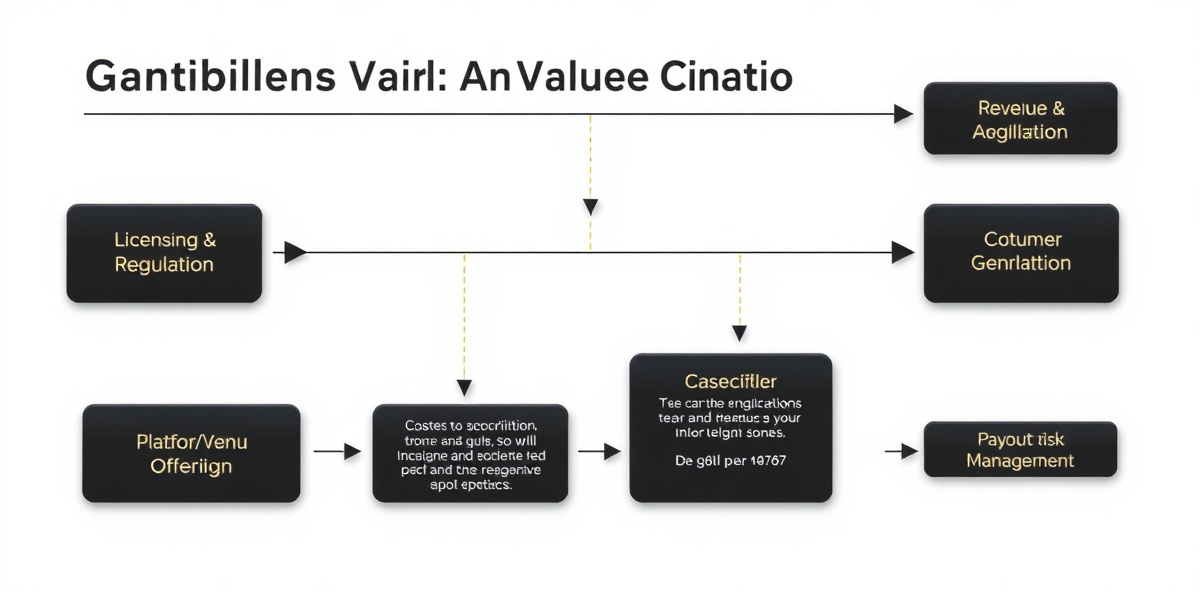
The Six Core Components:
- Licensing & Regulation: Obtaining legal authority to operate within jurisdictions
- Platform or Venue Setup: Building physical casinos or digital platforms
- Game Offering: Creating slots, tables, betting options, or sports betting products
- Customer Acquisition: Marketing and attracting players to your platform
- Revenue Generation: Managing the house edge, volume, and retention
- Payouts & Risk Management: Managing player losses, winnings, and financial risk
Goal: Teach the mechanics behind how casinos operate. Casinos do not rely on luck — they rely on probability + volume.
House Edge
Every casino game has a built-in mathematical advantage for the house. Over time, this advantage guarantees profits.
High Volume of Players
Casinos profit from scale. The more players you attract and retain, the more reliable your revenue becomes.
Customer Retention
Returning customers are more profitable than new customers. VIP programs and loyalty systems drive long-term revenue.
VIP/High-Roller Segments
High-stakes players generate disproportionate revenue. Targeting and retaining wealthy players is a key profit driver.
Online Scalability
Digital platforms have no physical capacity limits. One software platform can serve millions of players globally.
Multiple Revenue Streams
Casinos earn from games, restaurants, hotels, entertainment, sports betting, and ancillary services.
Key insight: Casinos do not rely on luck — they rely on probability + volume.
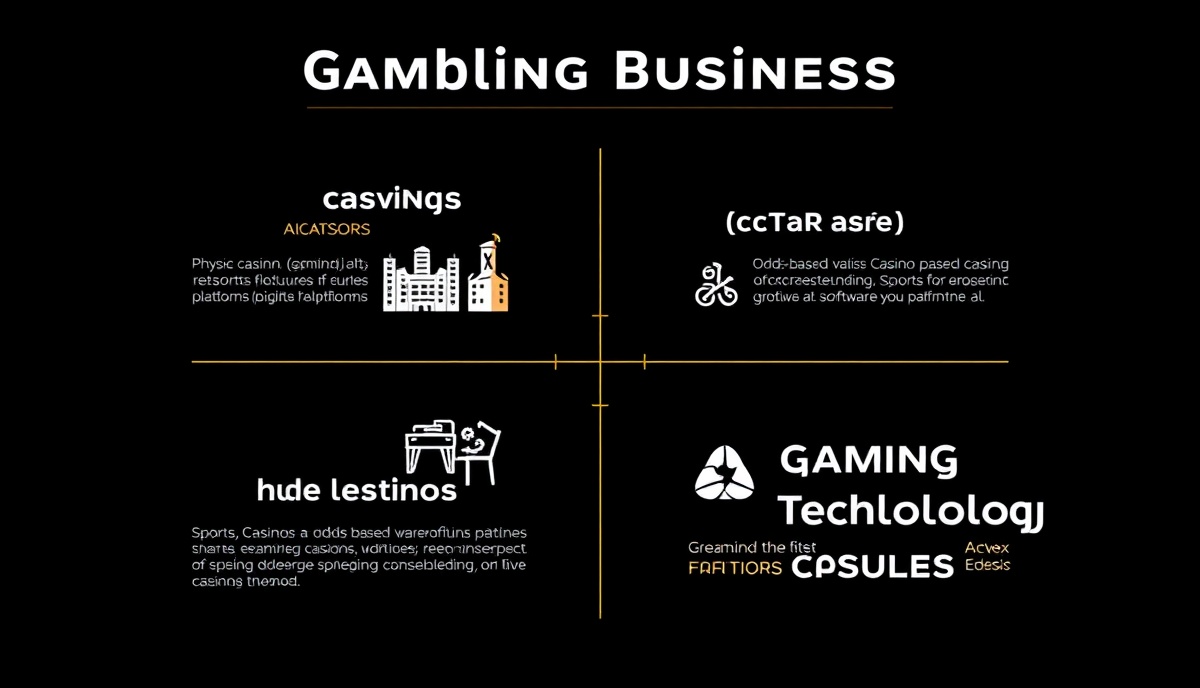
Physical Casinos & Resorts
Traditional gaming floors with table games, slots, restaurants, hotels, and entertainment. High capital requirements but generate strong brand presence and customer loyalty.
Online Casinos
Digital platforms offering games, sports betting, and virtual experiences. Lower overhead, global reach, and infinite scalability. Requires strong technology infrastructure and licensing.
Sports Betting
Odds-based wagering on sporting events. Can be standalone or integrated into larger platforms. Growing rapidly due to mainstream legitimacy and mobile adoption.
Gaming Technology Providers
Software platforms, payment systems, and infrastructure powering casinos and betting operations. High-margin recurring business serving multiple operators.
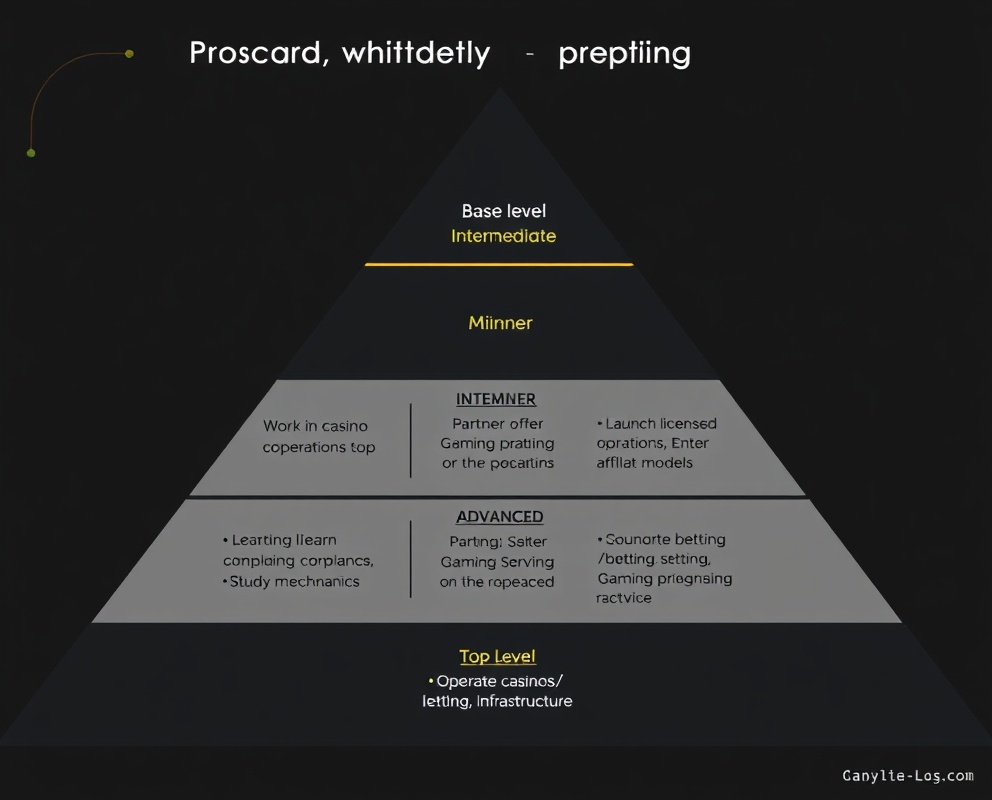
Beginner Level
- Work in casino operations (learn systems, compliance, customer behavior)
- Study game mechanics and probability
- Build foundational knowledge of regulations and licensing
Intermediate Level
- Partner in small gaming operations
- Start gaming-related services (marketing, consulting, affiliate programs)
- Enter sports betting partnerships or referral networks
- Develop gaming content platforms or educational resources
Advanced Level
- Launch licensed online gambling platforms
- Operate casinos or sports betting businesses
- Build gaming infrastructure and technology
- Scale regionally or globally
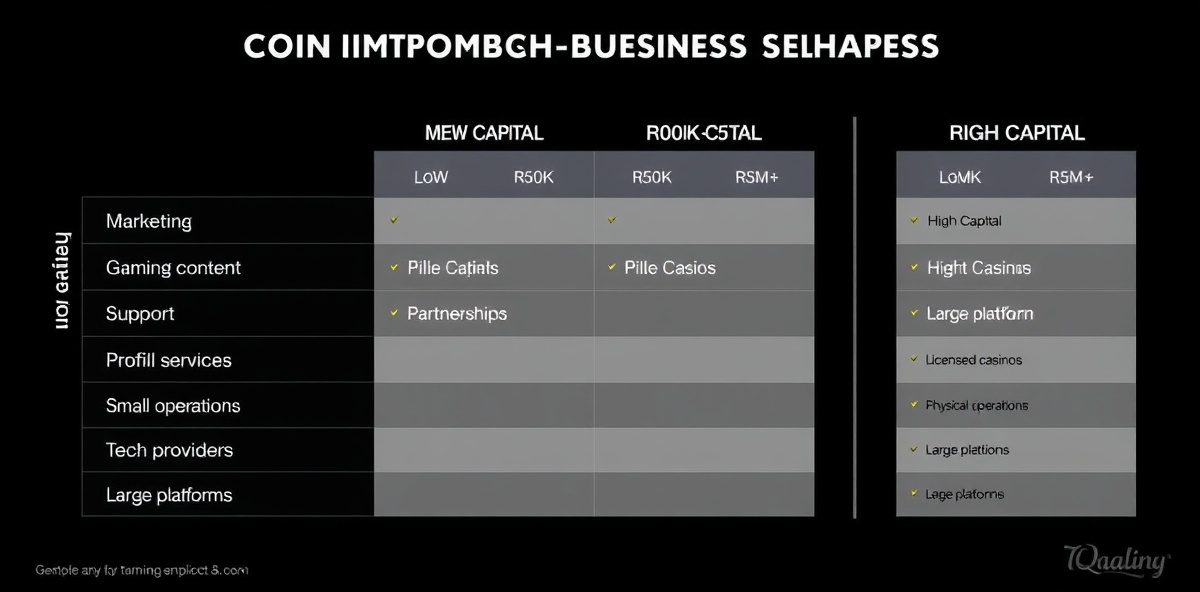
Low Capital (R10K – R500K)
- Affiliate marketing for online casinos
- Gaming content platforms and educational resources
- Consulting and support services for operators
- Sports betting analysis and picks services
Medium Capital (R500K – R5M)
- Small-scale gaming operations (local or regional)
- Gaming technology or service providers
- Sports betting affiliate networks
- Partnerships in licensed gaming ventures
High Capital (R5M+)
- Licensed online casinos and betting platforms
- Physical casino operations and resorts
- Large-scale sports betting platforms
- Gaming infrastructure and technology companies
Increase Player Base
Market expansion through advertising, partnerships, and geographic expansion. More players = more revenue.
Improve Customer Retention
VIP programs, loyalty rewards, personalized promotions, and superior customer service keep players engaged longer.
Expand Game Offerings
Add new games, sports, betting options, and entertainment to appeal to broader audiences and increase time on platform.
Enter New Markets
Licensing and operating in new jurisdictions multiplies revenue streams and reduces dependency on single markets.
Build Strong Brand Trust
Reputation, licensing, compliance, and transparent operations attract and retain quality players willing to wager higher amounts.
Leverage Technology
Mobile apps, AI-driven personalization, and seamless omnichannel experiences increase engagement and profitability.
Understanding the House Edge
Every casino game is designed with a mathematical advantage built in. Slot machines, roulette, blackjack, and all betting games have a fixed percentage edge favoring the house.
- Roulette: 2-5% house edge depending on variant
- Slots: 2-15% house edge depending on game design
- Blackjack: 0.5-2% house edge depending on rules
- Sports Betting: 4-6% house edge (vigorish/juice)
Why This Matters
Over time (usually weeks to months with enough volume), the house edge guarantees profits. This is not luck—it's mathematics and probability working at scale.
- 1 player playing 10 times might win due to luck
- 1 million players playing millions of times will always lose to the house edge
- Scale eliminates variance and guarantees mathematical returns
Key lesson: Consistency + volume = profitability. The house edge is a profit guarantee when managed correctly.
Why Online Casinos Are Dominating
Online gambling platforms have fundamentally changed the industry. They offer advantages that physical casinos cannot match:
Lower Overhead
- No expensive real estate or building costs
- No physical staff beyond essential compliance teams
- Automation reduces operational complexity
- Scalable infrastructure with minimal incremental costs
Global Customer Base
- Access to customers worldwide (where licensed)
- No geographic restrictions on player acquisition
- Operate 24/7 with 100% uptime capability
- Multi-language and multi-currency support
Technology-Driven Growth
- AI personalization increases engagement and lifetime value
- Mobile apps drive adoption and convenience
- Data analytics optimize games and marketing
- Seamless payment integration increases conversion
Online platforms are the future. Operators who master digital infrastructure will dominate the next decade.
South Africa's Unique Position
- Regulated Environment: South Africa has established licensing frameworks for gambling operators
- Growing Online Betting: Sports betting and online gambling are experiencing rapid growth
- Tourism-Driven Demand: International tourists drive demand for premium casino experiences
- Technology Infrastructure: Strong tech ecosystem supports platform development and operations
- Regional Leadership: SA can serve as hub for African gambling operations and licensing
Global Expansion Strategy
- Use South African licensing as foundation
- Expand to regulated markets (UK, Europe, Asia)
- Build online platform for global reach
- Target high-growth regions (Southeast Asia, Latin America)
- Maintain compliance in all jurisdictions
South Africa offers both local market opportunity and a launchpad for international gambling empire building.
Online Casinos
Licensed digital platforms with slots, table games, and poker. Global reach, high margins, scalable infrastructure.
Sports Betting Platforms
Odds-based wagering on sports. Fast-growing segment with high engagement. Strong repeat player economics.
Casino Resorts
Physical venues combining gaming with hospitality. High brand value, strong player loyalty, multiple revenue streams.
Gaming Software Companies
Technology providers serving operators. Recurring revenue model, high margins, serve multiple customers.
Affiliate Networks
Marketing platforms connecting players to operators. Low-cost model, performance-based revenue, global reach.
Betting Exchanges
Peer-to-peer betting platforms. Lower house edge, peer liquidity model, high engagement.
The billionaire-scale gambling fortunes are built on consistent, disciplined principles:
- Operate Within Regulations: Licensing, compliance, and legal frameworks are non-negotiable. This creates barriers to entry and protects market position.
- Scale Customer Base: Build from thousands to millions of players. Each new player represents recurring revenue potential.
- Leverage Technology: Automation, AI, and data analytics drive efficiency and customer lifetime value.
- Expand Globally: Multi-jurisdictional operations reduce single-market risk and multiply revenue.
- Focus on Long-Term Retention: VIP programs, personalization, and superior customer service create lifetime value.
- Diversify Revenue Streams: Multiple game types, sports betting, affiliate programs, and ancillary services reduce dependency.
- Build Strong Brand: Trust, transparency, and responsible gaming positioning attract quality players and licensing authorities.
Billionaire gambling fortunes are not built on luck or hype. They're built on scale, regulation, technology, and disciplined capital allocation.
How to deploy capital effectively in gambling businesses:
- Invest in Technology: Infrastructure, software, mobile apps, and AI systems generate the highest returns and create competitive advantages.
- Prioritize Customer Acquisition: Marketing and player acquisition drive revenue growth. The cost to acquire a customer is worth the lifetime value they generate.
- Manage Risk Carefully: Proper liquidity reserves, exposure limits, and hedging protect against downside while enabling growth.
- Maintain Liquidity for Payouts: Always have sufficient capital to honor player winnings. Trust is critical to operations.
- Reinvest Profits: The most successful operators reinvest profits into technology, market expansion, and new game offerings.
The gambling industry offers enormous opportunity, but also significant challenges:
Heavy Regulation
Licensing requirements, compliance costs, and regulatory oversight are significant. Regulatory changes can impact profitability.
Licensing Barriers
Entry into regulated markets requires substantial capital, expertise, and time. This is intentional—it protects established operators but restricts new entrants.
Ethical Considerations
Responsible gaming requirements, player protection obligations, and social responsibility are non-negotiable in modern gambling.
High Competition
Established global operators dominate markets. Competing requires differentiation, technology, or geographic focus.
Reputation Risk
A single scandal, compliance failure, or player protection breach can destroy a gambling brand and operating license.
Key lesson: This industry requires strict discipline and compliance. Cutting corners leads to license revocation and loss of everything.
Ethical operations are not optional—they're fundamental to long-term success in gambling.
Promote Responsible Gambling
- Clear messaging about odds and house edge
- Spending limits and self-exclusion options
- Addiction resources and support partnerships
- Education about responsible gaming
Protect Players
- Fair games and transparent mechanics
- Secure payment systems and data protection
- Age verification and player identification
- Rapid dispute resolution processes
Follow Legal Frameworks
- Strict licensing compliance
- Regular audits and reporting
- Anti-money laundering (AML) protocols
- Know Your Customer (KYC) procedures
Ensure Transparency
- Clear terms and conditions
- RTP (Return to Player) disclosures
- Regular third-party audits
- Accessible customer support
Responsible gambling is not a marketing tactic—it's the foundation of a sustainable, profitable, and respected gambling operation.
The most powerful wealth-building principle in gambling is that fortunes are built through structured systems, controlled risk, and large-scale operations.
Scale Matters
A casino with 1,000 players will experience variance and unpredictability. A casino with 1 million players will generate predictable, consistent returns. Scale eliminates luck and guarantees mathematical outcomes.
Systems Create Predictability
Betting rules, payout schedules, game mechanics, and operational procedures create predictable financial outcomes. The best operators design systems that mathematically favor the house while remaining fair to players.
Probability Guarantees Returns
The house edge is not an assumption—it's a mathematical guarantee. Over time, with sufficient scale, gambling operations will generate returns equal to the house edge multiplied by total wagered amounts.
Long-Term Compounding
Reinvesting profits into expansion, technology, and player acquisition compounds returns. A operator earning 3% on wagered amounts that doubles player base annually achieves exponential growth.
Wealth in gambling is not built by beating the odds—it's built by being the house. Probability, scale, and systems work in your favor over time.
- Highly Scalable Industry: From physical casinos to global online platforms, gambling offers unlimited growth potential
- Regulation Is Critical: Licensing creates barriers to entry and protects market position. It's also non-negotiable for legitimacy
- Technology Is a Major Driver: Digital platforms, mobile apps, and AI analytics are reshaping the industry
- The House Edge Guarantees Profits: With sufficient scale and volume, mathematical probability ensures returns
- Customer Lifetime Value Matters Most: Retention and VIP programs generate disproportionate returns
- Responsible Gaming Builds Trust: Ethical operations attract regulators, quality players, and institutional partners
- Global Expansion Multiplies Opportunity: Multi-jurisdictional operations reduce risk and amplify revenue
- Long-Term Discipline Wins: Consistent execution, reinvestment, and growth strategies compound wealth over decades
The gambling and casinos industry is just one of many wealth-building sectors covered in our educational guide series. Explore other industries, investment strategies, and capital allocation approaches:
The mathematical percentage advantage the casino has over players in any game. Ranges from 0.5-15% depending on the game.
The percentage of all wagered money a game returns to players over time. For example, 96% RTP means 4% house edge.
The commission or house edge in sports betting, usually 4-6%. The cut the sportsbook takes from losing bets.
Official government authorization to operate a gambling business in a specific jurisdiction. Required for legal operation.
Adherence to all regulatory requirements, anti-money laundering rules, player protection standards, and responsible gaming obligations.
Regulatory requirements to prevent gambling operations from being used to hide or legitimize illegal funds.
Identity verification and background checks required before players can deposit and play.
Loyalty and rewards system for high-value players offering bonuses, personalized service, and exclusive benefits.
The average cost to acquire a new player through marketing and advertising.
The total profit a player generates over their entire relationship with the casino.
Industry practices and policies designed to protect players from harmful gambling and addiction.
Short-term fluctuations in casino results. With low volume, variance is high. With high volume, variance disappears.