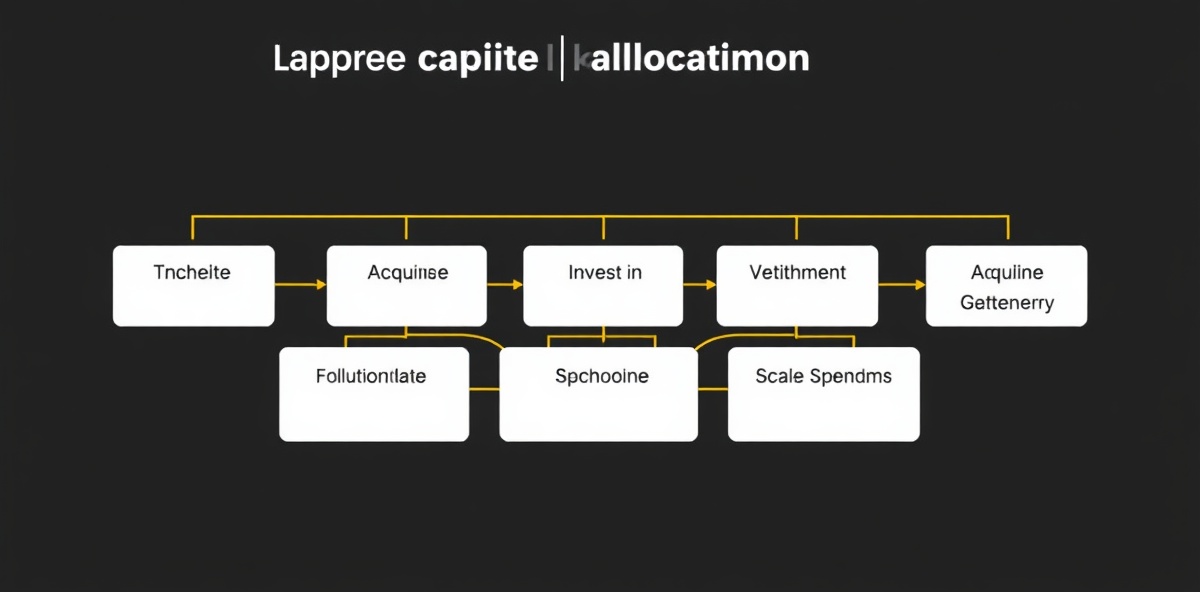
From First Capital to Global Investment Empire
Finance and investing sit at the center of wealth creation. While businesses generate income, finance multiplies it.
This industry allows individuals to allocate capital across opportunities, compound wealth, and build long-term financial empires. Some of the world's largest fortunes — from Warren Buffett to Ray Dalio to Jeff Bezos — were not built solely from operating businesses. They were built through disciplined capital allocation, strategic investing, and long-term compounding.
Finance is the management and allocation of money. It is the discipline of directing capital toward opportunities that generate returns.
Investing is the process of putting capital into assets that generate returns over time. These assets could be stocks, real estate, businesses, bonds, or alternative investments.
The difference between wealth creation and stagnation often comes down to this single distinction: income is what you earn from your job. Wealth is built through capital allocation and investment returns.
Core Principle: Income starts the journey. Investing and capital allocation create exponential growth.
The world's largest fortunes are built across these five core asset classes:
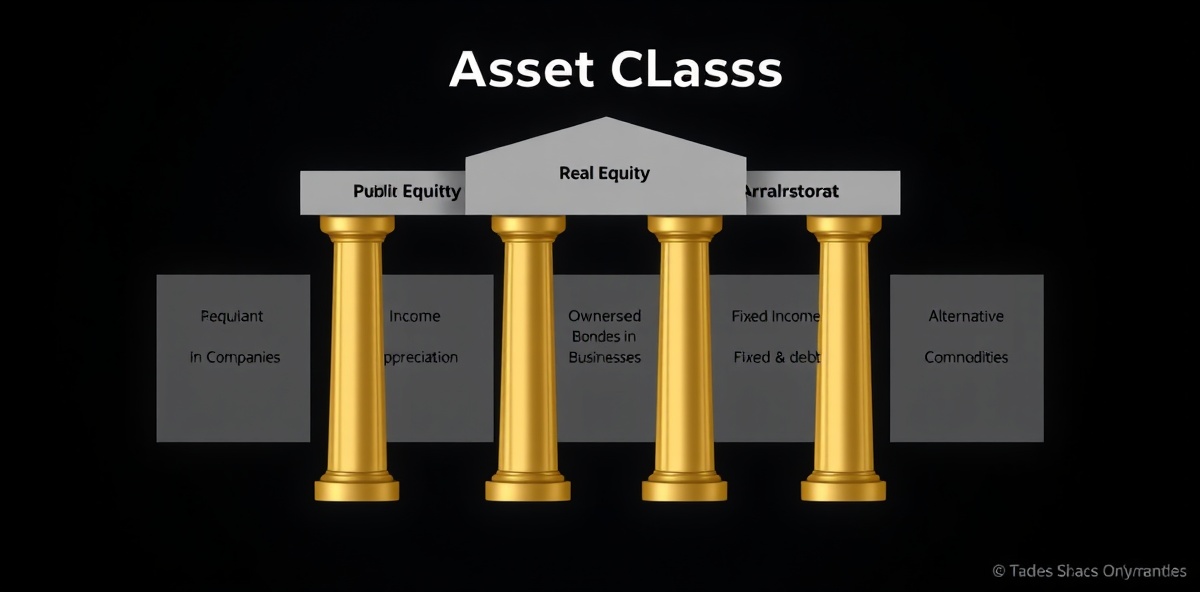
Ownership in publicly traded companies. Provides liquidity, diversification, and access to global markets. Suitable for all investor sizes.
Physical property generating income through rent and appreciation. Offers leverage, tax benefits, and tangible asset ownership.
Ownership in private businesses. Provides control, operational upside, and access to higher return opportunities.
Bonds and debt instruments providing stable, predictable returns. Lower volatility but also lower growth potential.
Hedge funds, commodities, cryptocurrencies, and other investments outside traditional categories. Higher risk/reward profile.
Wealth in finance is created through four primary mechanisms:
Key Insight: Compounding is the most powerful force in investing. Albert Einstein called it the eighth wonder of the world. Time + disciplined reinvestment = exponential wealth.
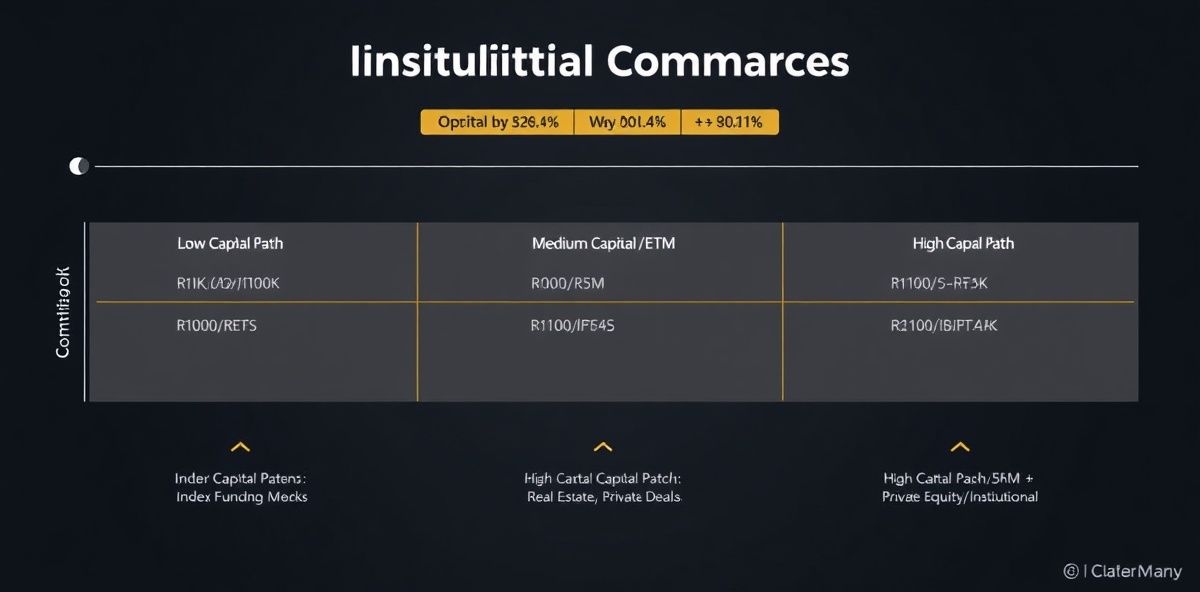
Different starting points lead to different wealth-building trajectories:
Goal: Build foundational capital and learn principles.
Goal: Build diversified portfolio with active management.
Goal: Institutional-scale capital allocation.
Your starting capital determines your initial strategy. The goal is to generate returns that fund your next phase:
Strategy: Diversified public market investing.
Strategy: Real estate and private deals.
Strategy: Institutional investing and control.
Scaling to billionaire wealth requires systematic expansion:
Compounding is the foundation of all long-term wealth. Small returns over decades create massive results:
Example: The Power of Compounding
Starting capital: R100,000
Annual return: 15% (modest for disciplined investor)
After 10 years: R404,555
After 20 years: R1,636,654
After 30 years: R6,621,177
After 40 years: R26,786,835
Key Truth: A disciplined investor earning 15% annually for 40 years turns R100K into R26.7M. This is not a get-rich-quick strategy. It is the boring, steady, reliably profitable approach to building generational wealth.
Why This Matters:
• Timing the market is nearly impossible. Time IN the market is everything.
• Small differences in returns compound dramatically. 14% vs 15% annual returns creates a 30% difference over 40 years.
• Starting early is more important than starting big. A 25-year-old investing R10K/month outperforms a 40-year-old investing R50K/month.
• Consistency beats intelligence. Boring, disciplined investing beats trying to be clever.
Different operational models allow different levels of capital and complexity:
Manage your own capital. Control, low cost, limited scale. Best for R100K-R10M portfolios.
Manage capital for multiple investors. Fees, reputation, larger scale. Requires track record and credibility.
Acquire and operate businesses. Active value creation, longer hold periods, larger returns. R100M+ minimum scale.
Dedicated team managing single family's capital. Professional structure, tax efficiency, generational wealth. R500M+ typically.
Own operating businesses + passive investments. Direct control, diversified income, institutional permanence. R1B+ potential.
Capital allocation is the single most important skill in finance. It determines all outcomes:
Core Idea: The best investors are capital allocators, not gamblers. They systematically deploy capital to opportunities with favorable risk-reward profiles. Boring consistency beats exciting speculation.
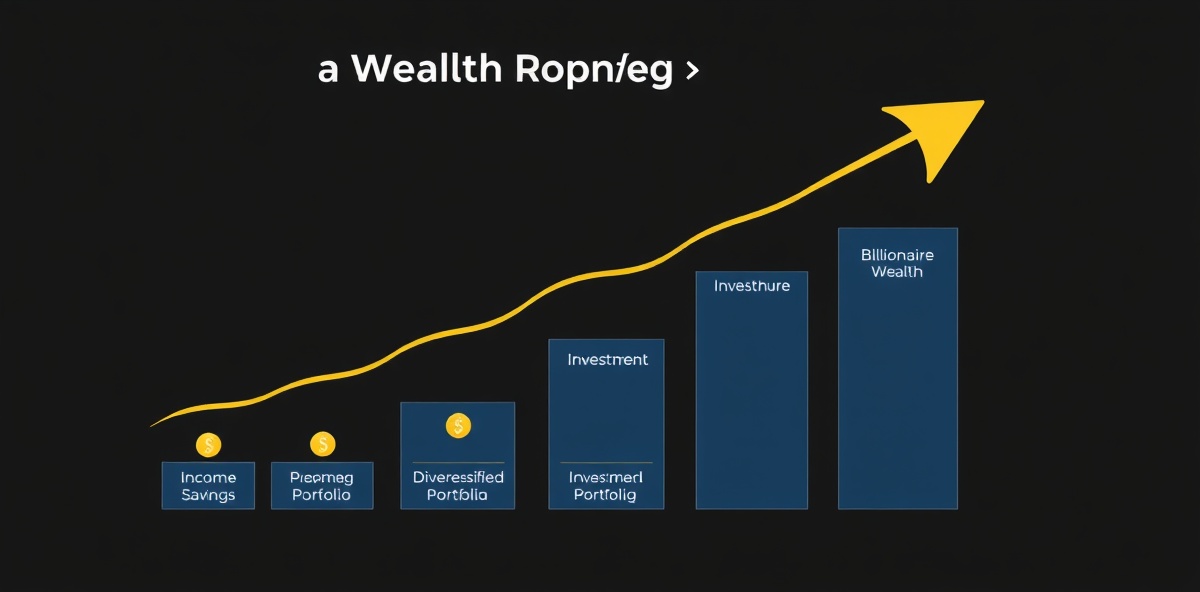
Building billion-dollar wealth follows this systematic progression:
Step 1: Earn — Generate income from work, business, or other sources. This is your raw material. Income is the beginning, not the end.
Step 2: Save — Create surplus capital from income. Target 30-50% savings rate. This capital fuels all future investment.
Step 3: Invest — Deploy capital into assets (stocks, real estate, businesses). Start small, learn, build experience.
Step 4: Acquire — Move from passive investor to owner. Acquire businesses, control assets, take operational roles.
Step 5: Scale — Increase portfolio size, add new assets, expand operations. Scale only after proving your systems.
Step 6: Hold — Build for permanence. Create generational wealth designed to compound across decades.
Wealth preservation is as important as wealth creation. The greatest investors focus on downside protection:
Key Lesson: It takes decades to build a fortune. One bad decision can destroy it. Preserve capital religiously. Play offense only after securing defense.
Smart investors balance local and global opportunities:
The world's largest financial fortunes follow these consistent principles:
Income is temporary. Assets generate wealth forever. Focus on building an asset portfolio, not just earning.
Invest with decades in mind. Time is your greatest asset. Let money compound undisturbed for 30-40 years.
Own operating businesses that generate cashflow and growth. Business ownership is faster than stock market wealth building.
Debt on income-generating assets accelerates wealth. Real estate and business leverage creates outsized returns.
Move from managing personal capital to allocating institutional capital. This allows exponential growth in portfolio size.
The strongest financial empires are built with integrity and responsibility:
This is the central truth of financial wealth building:
Income starts the journey. A R100K/year job is wonderful — it creates capital that can be deployed.
But wealth is not built by earning more income. It is built by:
The Foundation: Most people trade time for money. Wealthy people deploy capital to create exponential returns. This shift in mindset is the most important change you can make on your path to a billion-dollar fortune.
Common terms used in finance and investing:
The profit generated from an investment relative to its cost. A R100K investment generating R10K profit = 10% ROI.
The average annual growth rate of an investment over multiple years. Accounts for compounding of returns.
Using debt to multiply investment impact. Borrowing R2M to purchase a R5M property leverages your R3M capital by 1.67x.
How quickly an asset can be converted to cash. Stocks are liquid (sell in minutes). Real estate is illiquid (takes months).
The total collection of investments owned by an individual or institution. Diversified across asset classes and sectors.
Profit paid to shareholders. A stock generating 3% dividend yield pays R3,000 annually per R100,000 invested.
Increase in value of an asset. Buying a property for R1M and selling for R1.5M creates R500K capital appreciation.
Spreading capital across multiple assets and sectors. Reduces risk by avoiding over-concentration in single investments.
Learn foundational strategies across industries and investing disciplines. Build your knowledge foundation for institutional-grade wealth creation.